

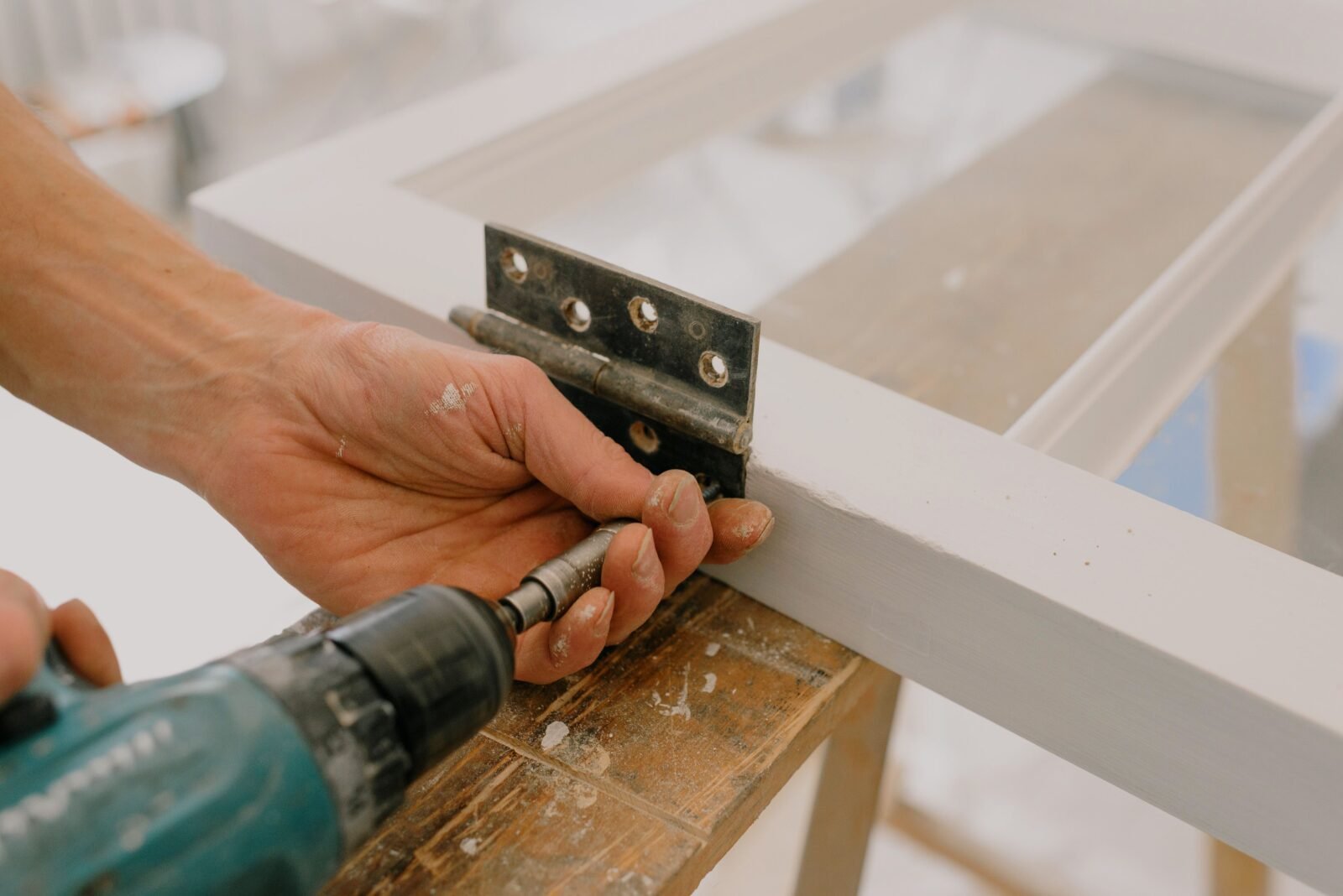
A sagging door is one of the most common household problems, and it can gradually become more frustrating if we leave it unresolved. A door that once opened and closed smoothly may begin rubbing against the frame, sticking at the top or bottom, scraping the floor, or refusing to latch properly. In most cases, the underlying problem is relatively simple: loose hinges, worn screws, a shifted door frame, or excessive weight placed on the door.
Fortunately, many sagging interior doors can be repaired with basic tools and a methodical approach. We do not always need to replace the door or call a professional. By identifying where the door has moved and correcting the source of the movement, we can often restore a smooth, even fit.
Why Does a Door Sag?
How to Fix a Sagging Door, we need to determine why the door has dropped out of alignment. The most common cause is loose hinge hardware. Over time, repeated opening and closing can cause hinge screws to loosen. Once the screws no longer hold the hinge firmly against the door or frame, the weight of the door pulls the hinge downward.
A heavy wooden door can make this problem more noticeable. Doors with mirrors, solid cores, decorative panels, or additional hardware can place considerable stress on their hinges.
Another common problem occurs when the original hinge screws are too short. Short screws may hold the hinge temporarily, but they do not penetrate deeply enough into the structural wood behind the door frame. Eventually, the screw holes can become enlarged, allowing the hinge to move.
The door itself may also have changed shape. Wood expands and contracts with humidity and temperature, which can alter the fit between the door and its frame. In older properties, the frame or surrounding structure may also shift slightly.
The location where the door rubs provides an important clue. If the upper corner on the latch side catches against the frame, the hinges are often allowing the door to drop. If the bottom edge scrapes the floor, we may have a combination of hinge movement, frame movement, or a door that has become warped.
How to Check a Sagging Door Before Repairing It
We should inspect the entire door before immediately tightening every screw. Close the door slowly and observe where the problem occurs.
Look for uneven gaps around the door. A properly aligned door usually has relatively consistent spacing between the door and frame. A noticeably narrow gap at one corner and a larger gap at another can indicate that the door has shifted.
Next, examine each hinge. Check whether the hinge leaves sit tightly against the wood or whether there is visible movement. We can gently lift the door by the handle while watching the hinge side. Excessive vertical movement can indicate loose or worn hinges.
We should also inspect the screw heads. A screw that turns endlessly without becoming tighter may be spinning in a damaged hole. In that situation, simply tightening it will not provide a durable repair.
If the door is unusually heavy, check whether the existing hinges are appropriate for its size and weight. Undersized or insufficient hinges can contribute to recurring sagging.
Tighten the Hinge Screws First
The easiest solution is often the simplest: tighten the existing hinge screws.
Start with the top hinge because it carries significant leverage from the weight of the door. Use the correct screwdriver or drill bit and tighten each screw carefully. Avoid excessive force, particularly on soft wood, because overtightening can strip the hole.
After tightening the top hinge, check the middle and bottom hinges. A loose screw in any hinge can allow the door to shift.
Close the door and test it. If the door has returned to its correct position, the repair may be complete.
If a screw turns without tightening, the hole is probably damaged. That requires a more substantial repair.
Repair Loose or Stripped Hinge Screw Holes
When hinge screws no longer grip the wood, we need to restore the holding power of the hole.
One practical method is to remove the loose screw and insert wooden toothpicks or small wood pieces coated with wood glue into the damaged hole. Allow the adhesive to set according to the product instructions, trim the excess material flush with the surface, and then reinstall the screw.
For a stronger repair, particularly on a heavy door, we can use a larger and longer screw that reaches solid structural wood. This approach is especially useful when the hinge is attached to a door jamb and the existing screws are unusually short.
A longer screw should be selected carefully so that it does not damage wiring, plumbing, or other hidden components around the frame. We should also avoid using a screw so long that it penetrates through the visible side of the frame.
For heavily damaged holes, specialized hinge-repair plates or wood-repair methods can provide additional reinforcement.
Use Longer Screws to Reinforce the Door Hinge
One of the most effective solutions for recurring door sag is replacing short hinge screws with longer structural screws that reach deeper into the framing.
The critical point is not simply screw length. The screw must engage solid material behind the thin door jamb. When the hinge is securely anchored into structural wood, the door has substantially better support.
We should begin with one screw at a time rather than removing every screw from the hinge simultaneously. Keeping the remaining screws in place helps maintain the door’s position while we reinforce the hinge.
The top hinge deserves particular attention because it experiences considerable load. Once the longer screw is installed, tighten the remaining screws and test the door.
If the door still sags, the other hinges may need reinforcement as well.
Adjust the Hinges When Tightening Is Not Enough
Sometimes the door is still misaligned even after the screws are secure. In this situation, we may need to adjust the hinge position.
A slight hinge adjustment can change the relationship between the door and frame. We can loosen the hinge screws slightly, reposition the hinge, and retighten it while maintaining the correct alignment.
For more substantial adjustments, removing the hinge and carefully modifying the hinge mortise may be necessary. A hinge that sits too deeply or too shallowly can affect how the door aligns with the frame.
This type of work should be done gradually. Removing too much material can create a new alignment problem that is harder to correct.
If the door has multiple hinges, alignment should be checked across all of them. A small error at one hinge can become a significant problem at the opposite corner.
What to Do When the Door Still Sags
If tightening and reinforcing the hinges does not solve the problem, we should look beyond the hardware.
A warped door may no longer fit correctly even when its hinges are perfectly secure. Wood doors are particularly susceptible to environmental changes. Excessive moisture, poor ventilation, and long-term humidity fluctuations can contribute to movement.
The frame may also be out of square. We can check this by measuring the diagonal dimensions of the opening. If the frame has shifted significantly, hinge adjustment alone may not solve the problem.
Another possibility is excessive door weight. A large solid-core door may require heavy-duty hinges or additional support. Replacing worn hinges with stronger hardware can prevent the problem from returning.
If the door rubs against the floor, we should also inspect the flooring. Changes to carpet, tile, laminate, or hardwood can reduce the available clearance and make an otherwise correctly aligned door appear to sag.
How to Prevent a Door From Sagging Again
Once the door has been repaired, regular maintenance can prevent the same problem from returning.
We should periodically inspect the hinge screws and tighten them when necessary. This is particularly useful for frequently used doors such as bedroom, bathroom, kitchen, and exterior doors.
Avoid hanging excessive weight from the door. Heavy hooks, mirrors, organizers, or storage racks can increase the load on the hinges.
Lubricating the hinges occasionally can also reduce friction and make operation smoother. However, lubrication does not correct structural problems, so loose hardware should always be addressed separately.
For heavy doors, high-quality hinges with appropriate load capacity are a worthwhile investment. Properly installed hinges provide more reliable support than repeatedly repairing damaged screw holes.
Frequently Asked Questions About Fixing a Sagging Door
Why is my door sagging?
The most common causes are loose hinge screws, damaged screw holes, inadequate screws, worn hinges, excessive door weight, or movement in the frame.
How do we fix a sagging door without removing it?
Start by tightening the hinge screws, especially those on the top hinge. If the holes are stripped, repair them or replace selected screws with longer ones that reach solid framing.
Why does my door rub at the top corner?
A door that rubs at the upper latch-side corner is often dropping slightly on the hinge side. Tightening or reinforcing the hinges can frequently correct the problem.
Should we use longer screws on door hinges?
Longer screws can provide stronger support when they reach solid structural wood behind the jamb. They should be installed carefully and selected for the particular door-frame construction.
Can a warped door be repaired?
Some minor deformation can be addressed, but a severely warped door may require professional assessment or replacement. The underlying moisture or structural problem should also be addressed.
Do we need to replace the entire door if it sags?
Usually not. Many sagging doors can be corrected by repairing or reinforcing the hinges. Replacement is generally considered when the door itself is severely damaged, warped, or structurally compromised.
Conclusion
Learning how to fix a sagging door starts with identifying the source of the movement. In many cases, loose hinge screws are responsible, making tightening the hardware the first repair worth attempting. If the screws no longer grip, repairing the holes or installing longer screws that reach solid framing can provide much stronger support.
When hinge repairs do not solve the issue, we should inspect the door, frame, hinges, floor clearance, and overall alignment. A warped door, shifted frame, or undersized hinge system may require a different solution.
With the right tools and a careful approach, most ordinary interior door alignment problems can be corrected without replacing the entire door. Regular inspection of hinge hardware, avoiding unnecessary weight, and using appropriately sized hinges can also help keep the door operating smoothly for years.