

Introduction
In modern buildings, air is no longer something left to chance. Behind every comfortable indoor environment lies a carefully engineered system responsible for managing airflow, temperature, and air quality. This system, known as a luftanlegg, plays a central role in ensuring that indoor spaces remain healthy, efficient, and livable.
As urbanization increases and buildings become more airtight for energy efficiency, the importance of controlled ventilation has grown significantly. A luftanlegg is not just about moving air—it is about creating a balanced indoor environment that supports human health, protects building structures, and reduces energy consumption. Understanding how these systems work reveals just how essential they are in daily life.
What Is luftanlegg
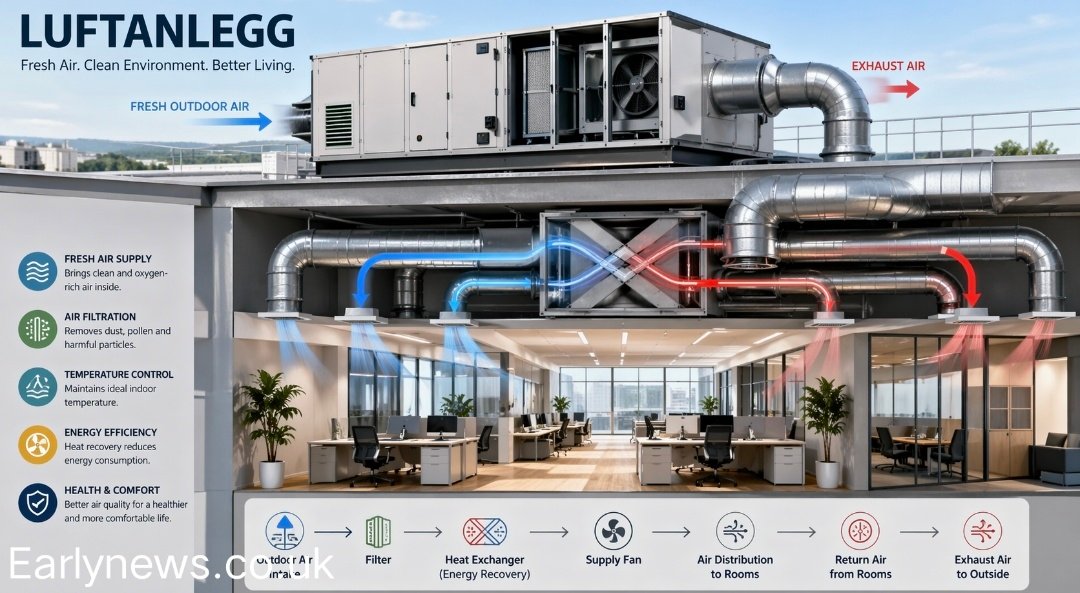
A luftanlegg is a mechanical ventilation and air management system designed to regulate indoor air conditions. It controls how air enters, circulates within, and exits a building. The system typically includes fans, ducts, filters, and heat exchangers that work together to maintain fresh and clean air.
READ MORE: Africaneur: Redefining Africa’s Entrepreneurial Future
Unlike simple ventilation methods such as opening windows, a luftanlegg provides controlled and consistent airflow. It ensures that stale air is removed while fresh air is introduced in a balanced manner. Many systems also regulate temperature and humidity, making them a key part of modern building infrastructure.
Key Components of luftanlegg Systems
A luftanlegg is made up of several interconnected components, each serving a specific function. The fan is responsible for moving air through the system, ensuring continuous circulation. Ducts act as pathways, distributing air to different areas of a building.
Filters play a critical role in improving air quality by removing dust, pollen, and other airborne particles. In advanced systems, high-efficiency filters can even capture bacteria and fine pollutants. Heat exchangers are another important element, allowing the system to recover energy from outgoing air and use it to condition incoming air.
Control systems manage the entire operation. Modern luftanlegg setups often include automated controls that adjust airflow based on occupancy, temperature, or air quality levels.
Types of luftanlegg Systems
There are different types of luftanlegg systems designed for specific environments. In residential buildings, systems are usually compact and designed for quiet operation. These systems focus on providing fresh air while maintaining energy efficiency.
Commercial buildings use more complex luftanlegg systems that can handle large spaces and varying occupancy levels. These systems often include advanced controls to adapt to changing conditions throughout the day.
Industrial luftanlegg systems are built for demanding environments. They manage heat, fumes, and particles generated during manufacturing processes. In such cases, the system is essential not only for comfort but also for worker safety.
In healthcare settings, luftanlegg systems are highly specialized. They control airflow patterns to prevent contamination and ensure sterile conditions, especially in operating rooms and isolation units.
The Role of luftanlegg in Indoor Air Quality
Indoor air quality has a direct impact on human health, and a luftanlegg is the primary system responsible for maintaining it. Without proper ventilation, pollutants such as carbon dioxide, volatile chemicals, and allergens can accumulate indoors.
A well-functioning luftanlegg continuously replaces stale air with fresh air, reducing the concentration of harmful substances. Filtration systems further enhance air quality by capturing particles that could trigger allergies or respiratory problems.
In workplaces, improved air quality has been linked to better concentration and productivity. In homes, it contributes to comfort and overall well-being, particularly for individuals with asthma or allergies.
Energy Efficiency and Environmental Impact
Modern luftanlegg systems are designed with energy efficiency as a priority. Traditional systems often wasted energy by heating or cooling incoming air from scratch. Today, many systems use heat recovery technology to reuse energy from outgoing air.
This significantly reduces energy consumption and lowers operating costs. It also helps reduce the environmental footprint of buildings, making luftanlegg systems an important part of sustainable construction.
Smart technology has further improved efficiency. Sensors can detect occupancy levels and adjust airflow accordingly, ensuring that energy is not wasted on empty spaces.
Installation and Maintenance Challenges
Installing a luftanlegg system requires careful planning and expertise. The layout of ducts, placement of vents, and sizing of components all affect system performance. Poor installation can lead to uneven airflow, noise issues, and increased energy use.
Maintenance is equally important. Filters need regular replacement to maintain air quality, while ducts and mechanical parts must be inspected periodically. Neglecting maintenance can reduce efficiency and even pose health risks.
Balancing performance and energy use is another challenge. A system must provide sufficient ventilation without consuming excessive energy, which requires thoughtful design and ongoing monitoring.
Real-World Importance of luftanlegg
The value of a luftanlegg becomes clear in real-world scenarios. In office buildings, it creates a comfortable environment that supports productivity. In factories, it ensures safe working conditions by removing harmful substances from the air.
Hospitals rely heavily on luftanlegg systems to prevent the spread of infections and maintain sterile environments. Even in homes, these systems are becoming increasingly important as modern construction techniques reduce natural airflow.
Without a properly functioning luftanlegg, many modern buildings would struggle to provide safe and comfortable indoor conditions.
Future Trends in luftanlegg Technology
The future of luftanlegg systems is closely tied to advancements in technology and growing environmental awareness. Artificial intelligence is expected to play a larger role, allowing systems to predict and respond to changes in real time.
Improved filtration technologies will continue to enhance air quality, particularly in urban areas with higher pollution levels. There is also a growing focus on personalized comfort, where individuals can control airflow and temperature in their immediate surroundings.
As building standards become stricter, luftanlegg systems will need to meet higher efficiency and performance requirements, driving further innovation in the field.
READ MORE: Global bank holidays 2025 calendar and impact guide
Conclusion
A luftanlegg is an essential part of modern infrastructure, quietly ensuring that indoor environments remain safe, comfortable, and efficient. From improving air quality to reducing energy consumption, its impact extends far beyond simple ventilation.
As technology continues to evolve, luftanlegg systems are becoming more advanced and adaptable. Understanding their role helps highlight their importance in everyday life, especially as we spend more time indoors. In the future, these systems will play an even greater role in shaping healthier and more sustainable living spaces.
FAQs
What is the main purpose of a luftanlegg?
The main purpose is to control indoor air by providing ventilation, improving air quality, and maintaining comfortable temperature and humidity levels.
Is a luftanlegg necessary in modern homes?
Yes, especially in airtight homes where natural ventilation is limited, making controlled airflow essential.
How does a luftanlegg improve air quality?
It removes stale air, filters pollutants, and introduces fresh air into indoor spaces.
Does a luftanlegg consume a lot of energy?
Modern systems are energy-efficient and often use heat recovery to reduce energy consumption.
How long does a luftanlegg system last?
With proper maintenance, a luftanlegg system can last 15–25 years or more.
READ MORE: https://earlynews.co.uk/