

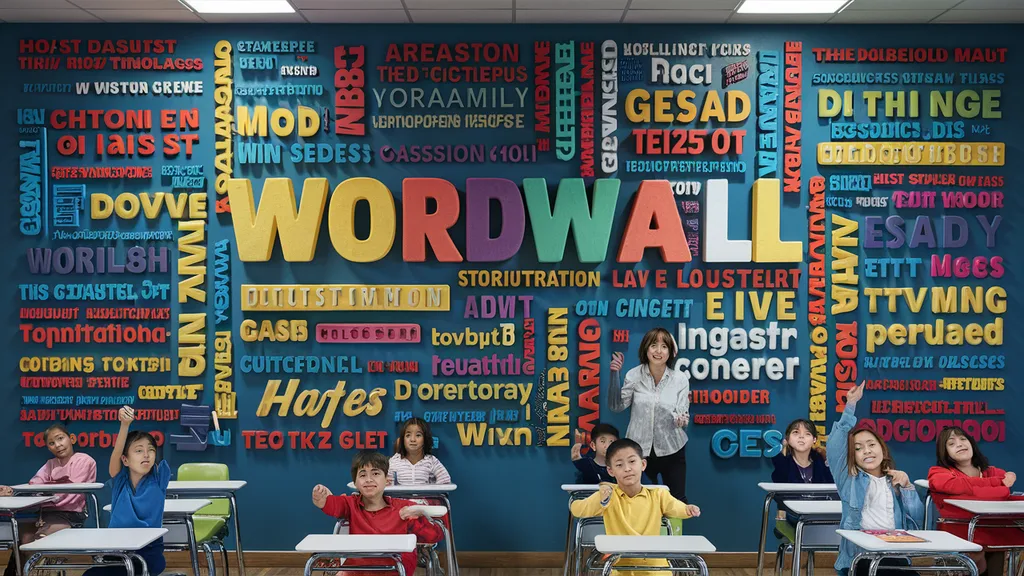
Education has undergone a remarkable transformation in recent years. Traditional teaching methods are increasingly being complemented by digital tools that make learning more engaging, interactive, and effective. Teachers today face the challenge of capturing students’ attention in a world filled with distractions while also ensuring that educational objectives are achieved. As a result, educational technology platforms have become essential resources for classrooms, remote learning environments, and independent study programs. Among these innovative solutions, Wordwall has emerged as one of the most recognized tools for creating interactive learning experiences.
Wordwall is widely appreciated for its ability to transform ordinary lessons into engaging activities that encourage participation and improve knowledge retention. By combining educational content with game-based learning elements, the platform helps educators create dynamic lessons that appeal to students of different ages and learning styles. Whether used in primary schools, secondary education, higher learning institutions, or professional training environments, Wordwall has become an important tool in modern education.
In this comprehensive guide, we explore Wordwall, its features, educational benefits, classroom applications, and its role in shaping the future of learning.
What Is Wordwall?
Wordwall is an educational platform designed to help teachers and educators create interactive learning activities. It allows users to transform traditional educational materials into engaging games, quizzes, matching exercises, word puzzles, and other interactive formats.
The platform is built around the idea that learning becomes more effective when students actively participate in the educational process. Rather than simply reading information or listening to lectures, students interact with content in ways that encourage problem-solving, recall, and critical thinking.
Why Wordwall Is Popular Among Educators
The popularity of Wordwall can be attributed to several factors. First, the platform makes lesson planning more efficient. Teachers often face significant workloads related to content preparation, assessment design, and classroom management. Wordwall simplifies many of these tasks by offering customizable templates and activity formats.
Second, students tend to respond positively to interactive learning environments. Educational games and activities create a sense of excitement that motivates participation and reduces boredom. When students enjoy the learning process, they are often more likely to remain engaged and retain information.
Key Features of Wordwall
Interactive Learning Activities
One of Wordwall’s most valuable features is its extensive collection of activity formats. Teachers can create quizzes, matching games, word searches, anagrams, random wheels, crossword puzzles, and many other interactive exercises.
These activities help transform traditional educational content into engaging learning experiences that encourage active participation.
Customizable Templates
Creating educational content from scratch can be time-consuming. Wordwall addresses this challenge by providing customizable templates that simplify activity creation.
Teachers can adapt templates to specific subjects, grade levels, and learning objectives, reducing preparation time while maintaining educational quality.
Game-Based Learning
Game-based learning has become a powerful educational strategy because it combines entertainment with instruction. Wordwall integrates gaming elements that motivate students while reinforcing important concepts.
This approach helps learners remain focused and engaged throughout lessons.
Printable Resources
Although digital learning continues to expand, many educators still value printable materials. Wordwall allows users to convert activities into printable formats, providing flexibility for both online and offline learning environments.
This feature is particularly useful in classrooms with limited internet access.
Educational Benefits of Wordwall
Improved Student Engagement
Student engagement is one of the most important factors influencing educational success. Interactive activities capture attention and encourage participation, making lessons more memorable and enjoyable.
When learners actively interact with content, they are more likely to develop a deeper understanding of the subject matter.
Enhanced Knowledge Retention
Research consistently shows that active learning improves memory retention. Wordwall activities encourage students to apply knowledge rather than passively consume information.
Repeated interaction with concepts through games and quizzes reinforces learning and supports long-term retention.
Support for Diverse Learning Styles
Every student learns differently. Some prefer visual materials, while others respond better to auditory, reading, or hands-on approaches.
Wordwall accommodates diverse learning preferences by offering multiple activity formats that engage different cognitive strengths.
Immediate Feedback
Feedback is an essential component of effective learning. Wordwall activities often provide immediate results, allowing students to identify mistakes and improve their understanding quickly.
This rapid feedback loop supports continuous learning and skill development.
Wordwall in Modern Classrooms
Modern classrooms increasingly emphasize collaboration, creativity, and technology integration. Wordwall aligns with these educational priorities by providing tools that encourage participation and active learning.
Teachers can use Wordwall to introduce new topics, reinforce lessons, review material before assessments, and evaluate student understanding. The platform can also support group activities that promote teamwork and communication skills.
The adaptability of Wordwall makes it suitable for various educational settings, including traditional classrooms, hybrid learning environments, and fully online courses.
The Role of Wordwall in Remote Learning
Remote learning has become an important part of modern education. As schools and institutions embrace digital instruction, educators require tools that maintain student engagement outside the classroom.
Wordwall supports remote learning by enabling teachers to share interactive activities online. Students can complete assignments independently while still benefiting from engaging educational experiences.
The platform helps bridge the gap between physical and virtual learning environments, ensuring that educational quality remains consistent regardless of location.
The Future of Interactive Education
Educational technology continues to evolve rapidly. Artificial intelligence, personalized learning systems, virtual reality, and adaptive educational platforms are reshaping how knowledge is delivered and acquired.
Interactive tools such as Wordwall are expected to remain central to this transformation. As educators seek innovative methods to engage learners, demand for flexible and user-friendly educational platforms will continue to grow.
Future developments may include enhanced personalization, advanced analytics, and deeper integration with other educational technologies. These innovations will further improve the effectiveness of interactive learning experiences.
Conclusion
Wordwall has established itself as a powerful educational platform that helps transform traditional lessons into engaging and interactive learning experiences. By combining game-based learning, customizable activities, and user-friendly tools, the platform supports both educators and students in achieving educational success.
As digital learning becomes increasingly important, platforms like Wordwall play a critical role in promoting engagement, knowledge retention, and accessibility. Whether used in classrooms, remote learning environments, or independent study programs, Wordwall demonstrates how technology can enhance education while making learning more enjoyable and effective.
Its continued popularity highlights the growing importance of interactive educational tools in preparing students for success in an increasingly digital world.
Frequently Asked Questions (FAQ)
What is Wordwall?
Wordwall is an educational platform that allows teachers and educators to create interactive learning activities, quizzes, games, and classroom resources.
Why is Wordwall popular in education?
Wordwall is popular because it makes lessons more engaging, interactive, and enjoyable while supporting educational objectives.
Can Wordwall be used for different subjects?
Yes. Wordwall can be used for mathematics, science, language learning, history, geography, and many other subjects.
How does Wordwall improve student engagement?
The platform uses interactive games and activities that encourage participation, active learning, and knowledge retention.
Is Wordwall suitable for remote learning?
Yes. Wordwall supports online and remote learning by allowing educators to share activities digitally with students.
What is the future of platforms like Wordwall?
Interactive educational platforms are expected to continue growing through innovations such as personalized learning, artificial intelligence, and advanced educational technologies.