

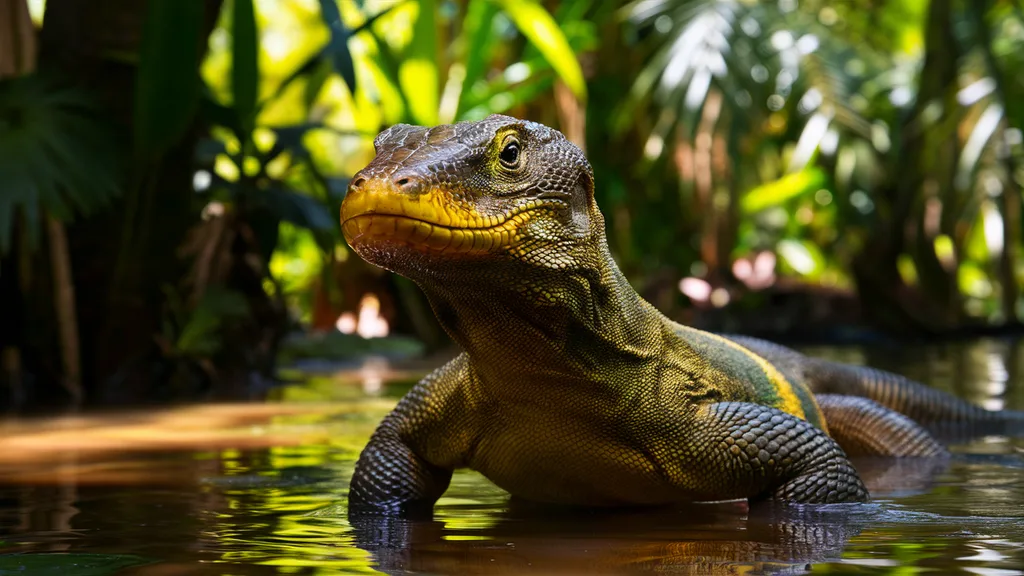
The animal kingdom contains countless fascinating creatures, but few reptiles command attention quite like the water monitor. Known for its intelligence, adaptability, impressive size, and semi-aquatic lifestyle, the water monitor is one of the largest lizard species on Earth. Found primarily throughout South and Southeast Asia, this remarkable reptile has successfully adapted to a variety of environments ranging from wetlands and riverbanks to urban landscapes and mangrove forests. Its ability to thrive in different habitats has made it one of the most successful monitor lizard species in the world.
Water monitors have fascinated scientists, wildlife enthusiasts, and reptile keepers for decades. Their combination of strength, agility, intelligence, and survival skills makes them an extraordinary example of reptilian evolution. Whether encountered in the wild or studied in zoological settings, water monitors continue to captivate people with their unique behavior and impressive physical characteristics. This comprehensive guide explores everything you need to know about water monitors, including their habitat, diet, behavior, adaptations, conservation status, and importance within their ecosystems.
What Is a Water Monitor?
The water monitor is a large lizard belonging to the monitor lizard family, known scientifically as Varanidae. It is closely related to other monitor species, including the famous Komodo dragon, but has developed unique adaptations that allow it to excel in aquatic environments.
Water monitors are among the largest lizards in the world, with some individuals reaching lengths exceeding two meters. Their muscular bodies, long tails, sharp claws, and powerful jaws make them highly effective predators and scavengers. Despite their intimidating appearance, water monitors generally avoid human interaction and prefer to retreat when threatened.
One of the most distinctive features of the water monitor is its remarkable swimming ability. Unlike many other lizards, water monitors are extremely comfortable in aquatic environments and can remain submerged for extended periods while searching for food or avoiding danger.
Natural Habitat and Geographic Distribution
Water monitors are widely distributed throughout South and Southeast Asia. Their range extends across countries such as Thailand, Indonesia, Malaysia, Sri Lanka, India, and several neighboring regions.
These reptiles typically inhabit areas near water sources, including rivers, lakes, swamps, canals, mangrove forests, and wetlands. Their strong swimming abilities make aquatic environments particularly suitable for hunting and protection. However, water monitors are highly adaptable and can also be found in forests, agricultural regions, and even urban areas where food sources are abundant.
Their adaptability has contributed significantly to their success as a species. Unlike many reptiles that require highly specific environmental conditions, water monitors can survive in a variety of habitats provided that water and food remain available.
Physical Characteristics
Water monitors possess several physical traits that make them highly effective predators. Their elongated bodies are covered with durable scales that provide protection against environmental hazards and potential predators. Their muscular tails serve multiple functions, including swimming propulsion, balance, and self-defense.
Adult water monitors often display dark coloration with lighter markings or patterns distributed across their bodies. Juveniles frequently exhibit brighter patterns that gradually become less pronounced as they mature.
Their forked tongues function similarly to those of snakes, allowing them to collect chemical particles from the environment. This highly developed sensory system helps water monitors locate prey, identify threats, and navigate their surroundings efficiently.
Diet and Feeding Habits
Water monitors are opportunistic carnivores with an extremely varied diet. Their adaptability extends to feeding behavior, enabling them to consume a wide range of food sources depending on availability.
Common prey items include fish, amphibians, birds, small mammals, reptiles, insects, crustaceans, and eggs. They are also known to scavenge carrion, which plays an important ecological role by helping remove dead animals from the environment.
Their strong jaws and sharp teeth allow them to capture and consume prey efficiently. Water monitors are skilled hunters that often rely on stealth and patience when approaching potential food sources. Their ability to swim effectively further expands their hunting opportunities by granting access to aquatic prey.
Behavior and Intelligence
Water monitors are widely regarded as intelligent reptiles. Researchers and experienced reptile keepers have observed complex behaviors, problem-solving abilities, and adaptability in these animals.
Although generally solitary, water monitors exhibit impressive awareness of their surroundings and can quickly learn patterns associated with food availability or environmental changes. Their intelligence contributes significantly to their survival in both natural and human-modified habitats.
When threatened, water monitors typically prefer escape over confrontation. They may retreat into water, climb trees, or seek shelter in burrows. However, if cornered, they can become defensive and use their claws, tail, and jaws to protect themselves.
Swimming and Aquatic Adaptations
One of the defining characteristics of the water monitor is its exceptional swimming ability. Their flattened tails function like powerful paddles, allowing efficient movement through water. Strong limbs assist with steering and propulsion, while their streamlined bodies reduce resistance.
Water monitors can remain underwater for extended periods and are capable of traveling significant distances while swimming. These adaptations provide advantages in hunting, escaping predators, and exploring new territories.
Their affinity for water distinguishes them from many other large lizard species and contributes significantly to their ecological success.
Role in the Ecosystem
Water monitors play a vital role in maintaining ecological balance. As both predators and scavengers, they help regulate populations of smaller animals while removing carcasses that could otherwise contribute to disease transmission.
Their presence supports healthy ecosystem function by participating in nutrient cycling and influencing food web dynamics. In many environments, water monitors occupy an important position as mid-to-top-level predators.
The ecological contributions of water monitors highlight the importance of protecting their habitats and ensuring the long-term survival of their populations.
Conservation and Human Interaction
Although water monitors remain relatively widespread, habitat destruction, pollution, illegal wildlife trade, and human conflict can pose challenges in certain regions. Expanding urban development and environmental degradation may reduce suitable habitats and increase interactions between humans and wildlife.
Conservation efforts focus on habitat protection, public education, and sustainable wildlife management practices. In many areas, water monitors have demonstrated remarkable resilience and adaptability, allowing them to persist despite environmental pressures.
Promoting awareness about their ecological importance can help foster coexistence and support conservation initiatives aimed at protecting both the species and its natural habitats.
Water Monitors as Exotic Pets
Water monitors occasionally attract interest within the exotic pet community due to their intelligence and impressive appearance. However, these reptiles require extensive space, specialized care, environmental enrichment, and experienced handling.
Their large size and complex needs make them unsuitable for most casual reptile owners. Prospective keepers should thoroughly research husbandry requirements before considering ownership.
Responsible reptile care is essential for ensuring the welfare of these highly intelligent animals in captivity.
Conclusion
The water monitor stands among the most impressive reptiles on Earth. Its remarkable intelligence, adaptability, powerful swimming abilities, and ecological significance make it a truly extraordinary species. Found throughout South and Southeast Asia, water monitors have successfully adapted to diverse habitats while maintaining their role as effective predators and scavengers. Their fascinating behavior, physical strength, and survival skills continue to attract interest from researchers, wildlife enthusiasts, and conservationists alike. Understanding and protecting these remarkable reptiles is essential for preserving biodiversity and maintaining healthy ecosystems for future generations.
Frequently Asked Questions (FAQ)
What is a water monitor?
A water monitor is a large semi-aquatic lizard belonging to the monitor lizard family and found primarily in South and Southeast Asia.
How large can a water monitor grow?
Some water monitors can exceed two meters in length, making them among the largest lizard species in the world.
What do water monitors eat?
They consume fish, amphibians, birds, mammals, reptiles, insects, eggs, and carrion.
Are water monitors dangerous to humans?
They generally avoid humans and prefer escape over confrontation, although they may defend themselves if threatened.
Can water monitors swim?
Yes. They are excellent swimmers and possess specialized adaptations that allow them to move efficiently through water.
Where do water monitors live?
They inhabit wetlands, rivers, lakes, mangrove forests, swamps, and other areas near water sources.
Why are water monitors important to ecosystems?
They help regulate animal populations and remove carrion, contributing to ecological balance.
Can water monitors be kept as pets?
They can be kept by experienced reptile owners, but their large size and complex care requirements make them unsuitable for most people.