

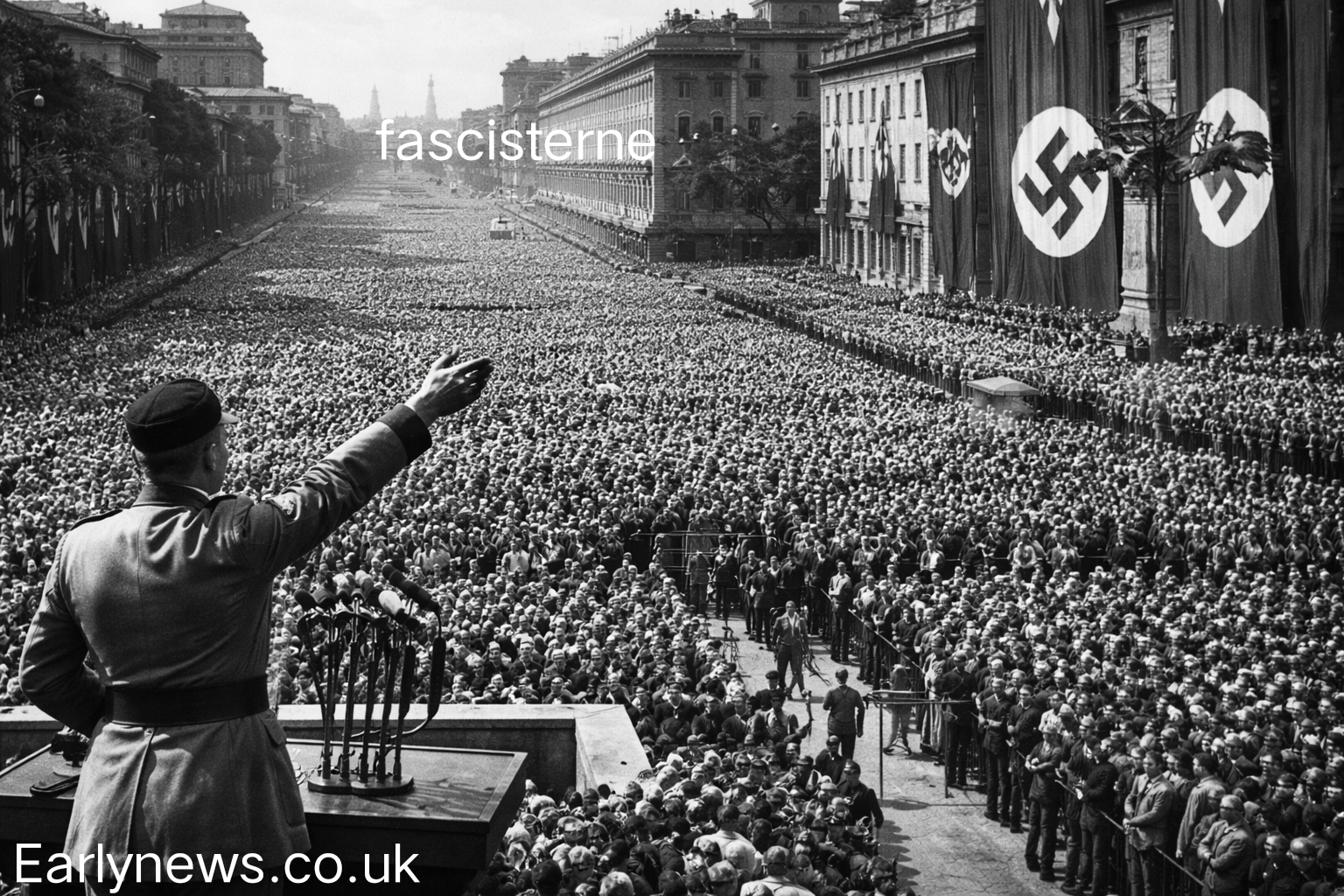
Introduction
The term fascisterne carries a heavy historical weight, often associated with authoritarian rule, extreme nationalism, and rigid political control. While many people recognize the word in passing, its deeper meaning, origins, and long-term consequences are often misunderstood or oversimplified. To truly grasp the significance of fascisterne, one must explore not only the ideology itself but also the conditions that allowed it to rise, the methods it employed to maintain power, and the echoes it still leaves in modern societies.
The story of fascisterne is not just about one country or one period in history. It is a complex narrative involving economic instability, political dissatisfaction, and the human tendency to seek strong leadership during times of uncertainty. Understanding this phenomenon is essential, not just for historical knowledge, but for recognizing similar patterns in the present.
What Is fascisterne
The word fascisterne refers to followers or proponents of fascism, a political ideology that emerged in early 20th-century Europe. Fascism is characterized by centralized authority, suppression of opposition, and a strong emphasis on national unity and identity. It rejects democratic principles, often replacing them with a single-party state led by a powerful leader.
READ MORE: cfahome Platform Insights: Real Uses, Features, and Value
At its core, fascisterne believed in the idea that the nation must come before the individual. Personal freedoms were considered secondary to the strength and unity of the state. This belief justified strict control over media, education, and even private life. The ideology also promoted militarism, discipline, and loyalty to authority as essential virtues.
The rise of fascisterne was not accidental. It developed in societies that were experiencing economic hardship, political chaos, and social unrest. People, frustrated with instability, often turned to strong leaders who promised order, pride, and national revival.
Historical Origins of fascisterne
The roots of fascisterne can be traced back to post-World War I Europe, particularly in Italy. After the war, Italy faced economic crisis, unemployment, and political fragmentation. It was in this environment that Benito Mussolini rose to power, establishing the first fascist regime.
Mussolini’s movement attracted individuals who were disillusioned with traditional politics. These early fascisterne supported the idea of a strong, unified state that could restore national pride and stability. The movement quickly grew, using propaganda, violence, and political maneuvering to eliminate opposition.
Soon after, similar ideologies appeared in other countries, most notably in Germany under Adolf Hitler. Although Nazism had its own distinct features, it shared many core principles with fascisterne, including authoritarian rule and aggressive nationalism.
Core Ideological Principles
The ideology followed by fascisterne is built on several interconnected ideas. One of the most significant is the rejection of liberal democracy. Fascisterne viewed democratic systems as weak and ineffective, believing that too much freedom led to disorder.
Another central principle is the glorification of the state. The state was seen as a living entity that required absolute loyalty. Individuals were expected to sacrifice their personal interests for the greater good of the nation.
Nationalism played a crucial role as well. Fascisterne promoted the idea that their nation was superior and deserved to dominate others. This belief often led to expansionist policies and conflicts with neighboring countries.
The ideology also emphasized discipline and hierarchy. Society was structured in a way that reinforced authority, with leaders at the top and citizens expected to follow without question.
The Role of Propaganda and Control
One of the defining features of fascisterne was their mastery of propaganda. They understood the power of media in shaping public opinion and used it extensively to spread their ideology.
Newspapers, radio broadcasts, and public speeches were carefully controlled to present a positive image of the regime. Opposition voices were silenced, and alternative viewpoints were suppressed. This created an environment where citizens were exposed only to information that supported the state’s narrative.
Education systems were also manipulated to instill loyalty from a young age. Children were taught to admire their leaders and view the state as the ultimate authority. Over time, this constant reinforcement made it difficult for individuals to question or resist the ideology.
Economic and Social Policies
Fascisterne did not follow a single economic model but generally supported a system where the state had significant control over industry and production. Private property was allowed, but it operated under strict government regulation.
The goal was to create a self-sufficient economy that could support the nation’s ambitions. This often involved large-scale public works projects and military expansion, which provided employment but also increased state control.
Socially, fascisterne promoted traditional roles and values. They emphasized unity, discipline, and loyalty, often discouraging diversity and individuality. Minority groups were frequently marginalized or persecuted, as they were seen as threats to national unity.
The Expansion and Global Impact
The influence of fascisterne extended far beyond their countries of origin. Their aggressive policies and expansionist ambitions played a major role in the outbreak of World War II.
During this period, fascist regimes sought to expand their territories and impose their ideologies on other nations. This led to widespread destruction, loss of life, and long-lasting global consequences.
The defeat of fascist powers marked the end of their dominance, but the impact of fascisterne did not disappear. The war reshaped global politics, leading to new alliances, institutions, and a renewed emphasis on human rights.
Decline and Aftermath
The fall of fascisterne was swift once their military power weakened. As Allied forces advanced, fascist regimes collapsed, and their leaders were removed from power.
In the aftermath, many countries undertook efforts to rebuild their political systems and prevent the return of authoritarian rule. This included the establishment of democratic institutions and legal frameworks designed to protect individual freedoms.
However, the legacy of fascisterne remained. The atrocities committed during their rule served as a stark reminder of the dangers of unchecked power and extreme ideology.
Modern Relevance and Interpretations
Even today, the concept of fascisterne continues to be discussed and debated. While traditional fascist regimes no longer dominate global politics, elements of the ideology can still be observed in certain movements and governments.
Modern discussions often focus on the warning signs associated with fascisterne, such as the erosion of democratic institutions, the spread of misinformation, and the rise of extreme nationalism. These discussions highlight the importance of vigilance and critical thinking in preserving democratic values.
It is also important to recognize that the term is sometimes used loosely or inaccurately in contemporary discourse. Not every authoritarian or nationalist movement qualifies as fascisterne, and understanding the historical context is essential for accurate interpretation.
Misconceptions About fascisterne
There are several common misconceptions surrounding fascisterne. One of the most widespread is the belief that fascism is purely a relic of the past. While the classic form of fascisterne may no longer exist, the underlying ideas can still influence modern politics.
Another misconception is that fascisterne were solely driven by irrational hatred. While prejudice and discrimination were certainly present, the ideology was also rooted in structured political and economic theories, making it more complex than it is often portrayed.
Some people also assume that fascisterne gained power through force alone. In reality, many fascist movements initially rose to power through legal and democratic means, exploiting existing systems before dismantling them.
READ MORE: Viltnemnda: Roles, Responsibilities & Wildlife Management Guide
Conclusion
The story of fascisterne is a powerful reminder of how fragile political systems can be in times of crisis. It shows how easily fear, instability, and dissatisfaction can be transformed into support for authoritarian rule.
Understanding fascisterne requires more than just memorizing historical events. It involves recognizing the patterns, ideas, and conditions that allowed such movements to rise. By studying these elements, societies can better protect themselves from repeating the mistakes of the past.
The legacy of fascisterne is not just a chapter in history; it is a continuing lesson about power, responsibility, and the importance of safeguarding freedom.
FAQs
1. What does fascisterne mean?
Fascisterne refers to individuals who support or follow fascism, an authoritarian political ideology centered on strong leadership and national unity.
2. Where did fascisterne originate?
The movement began in Italy after World War I and later spread to other countries, including Germany.
3. What are the main beliefs of fascisterne?
They emphasize nationalism, centralized power, suppression of opposition, and loyalty to the state above individual rights.
4. Are fascisterne still present today?
While traditional fascist regimes are no longer dominant, some elements of the ideology can still be seen in certain political movements.
5. Why is it important to study fascisterne?
Studying fascisterne helps people understand the dangers of authoritarianism and recognize warning signs in modern political systems.
READ MORE: https://earlynews.co.uk/