

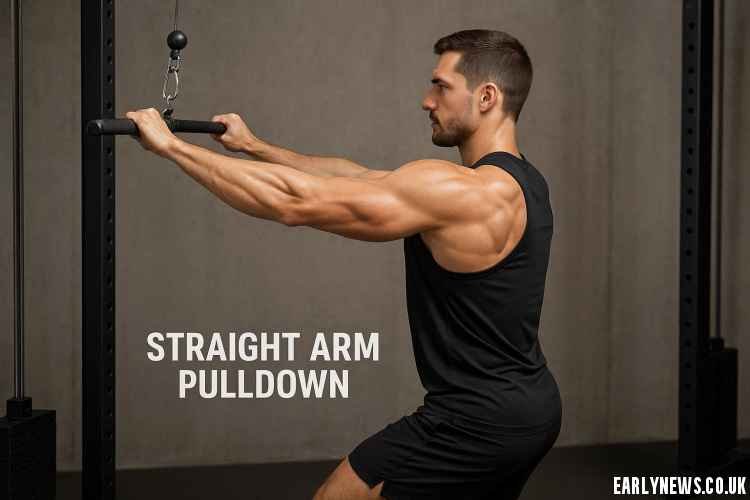
The straight arm pulldown has become one of the most effective back isolation exercises in modern strength training. In 2026, it remains a staple movement for athletes, bodybuilders, and gym beginners looking to improve lat width, back definition, posture, and mind-muscle connection. Unlike traditional pulldowns or heavy rowing movements, the straight arm pulldown isolates the lats while minimizing bicep involvement, making it ideal for focused back development.
Fitness coaches and programs like ATHLEAN-X continue recommending the exercise because it teaches proper shoulder extension mechanics while building stronger and more defined lats. Whether used as a warm-up, pre-exhaust movement, or finisher, the straight arm pulldown fits almost every back training routine.
What Is the Straight Arm Pulldown? 2026 Exercise Overview

Straight Arm Pulldown: The straight arm lat pulldown is a cable-based pulling exercise designed to target the latissimus dorsi muscles, commonly called the lats. The movement is performed using a cable machine with either a straight bar attachment or a rope attachment.
Exercise Profile 2026
| Feature | Details |
|---|---|
| Primary Muscle | Lats |
| Secondary Muscles | Abs, shoulders, upper back, biceps |
| Equipment | Cable machine |
| Mechanics | Compound movement |
| Force Type | Pull (Bilateral) |
| Experience Level | Beginner to Advanced |
Why It’s Different From a Regular Lat Pulldown
The key difference is simple:
- In a traditional lat pulldown, your elbows bend significantly.
- In a straight arm pulldown, your arms stay nearly straight throughout the exercise.
This reduces bicep dominance and forces the back muscles to generate the movement. Because of this, many trainers use the exercise to improve the feeling of lat activation before heavier lifts.
Muscles Worked: Why the Straight Arm Pulldown Is Unique in 2026
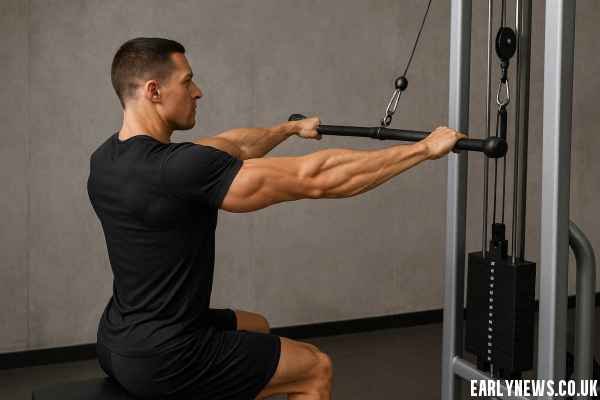
One reason the straight arm pulldown remains popular in 2026 is its ability to isolate muscles many people struggle to feel during back training.
Primary Muscles Targeted
The exercise mainly works the:
- Latissimus dorsi (lats) — responsible for back width
- Posterior deltoids — assist shoulder movement
Secondary Muscles and Stabilizers
Additional muscles involved include:
- Triceps long head
- Teres major
- Rhomboids
- Lower traps
- Core and abdominal muscles
Your abs play a major role in stabilizing the torso and preventing excessive arching during the movement.
2026 Training Insight
Many coaches compare the movement pattern to a dumbbell pullover because both emphasize shoulder extension and lat stretching. The focus should always remain on:
- Full range of motion
- Controlled tempo
- Strong contraction
- Stretch at the top
The exercise works best when lifters prioritize muscle engagement instead of chasing heavy weight.
How To Do the Straight Arm Pulldown Correctly
Proper form is critical. Small mistakes can shift tension away from the lats and turn the movement into a shoulder or tricep exercise.
Setup Instructions
- Set the cable pulley to the highest setting.
- Attach a straight bar or rope attachment.
- Grip the attachment shoulder-width apart.
- Step back slightly to create cable tension.
- Keep feet shoulder-width apart with soft knees.
- Hinge slightly forward at the hips.
- Keep chest up and core tight.
Execution
To perform the rep correctly:
- Keep a slight bend in the elbows.
- Pull the bar downward in an arc motion.
- Drive the arms toward the thighs.
- Stop when hands reach the upper thigh area.
- Slowly return to the start position.
Important Form Cues
- Keep shoulders down
- Avoid rounding the upper back
- Do not lock out elbows
- Move slowly during the eccentric phase
Breathing also matters:
- Exhale while pulling down
- Inhale while returning upward
Common Straight Arm Pulldown Mistakes in 2026
Many gym-goers reduce the effectiveness of the exercise because of poor execution. According to modern coaches and biomechanics experts, these are the biggest mistakes.
Pulling Straight Down Instead of in an Arc
The cable should move in a curved path toward the thighs, not straight vertically downward. The arc better matches natural shoulder mechanics.
Locking the Elbows
Keeping the elbows fully locked increases joint stress and removes smooth movement mechanics. Maintain a slight bend throughout the set.
Using Momentum
Swinging the body or using momentum decreases tension on the lats. Controlled reps create better muscle activation and reduce injury risk.
Letting the Elbows Bend Too Much
Once the elbows bend excessively, the triceps and biceps begin taking over the movement.
Straight Arm Pulldown vs Lat Pulldown
Although both exercises train the back, they serve different purposes.
| Feature | Straight Arm Pulldown | Traditional Lat Pulldown |
|---|---|---|
| Elbow Position | Nearly straight | Bent |
| Bicep Involvement | Minimal | High |
| Weight Used | Lighter | Heavier |
| Main Goal | Isolation & activation | Strength & overload |
| Mind-Muscle Connection | Excellent | Moderate |
Best 2026 Use Cases
The straight arm pulldown works especially well as:
- A pre-exhaust movement before rows
- A finisher at the end of back day
- A lat activation drill before pull-ups
Straight Arm Pulldown Strength Standards 2026
Strength standards in 2026 are based on millions of logged lifting performances.
Male Standards for a 180 lb Lifter
| Level | Weight |
|---|---|
| Beginner | 43 lbs |
| Novice | 80 lbs |
| Intermediate | 129 lbs |
| Advanced | 191 lbs |
| Elite | 262 lbs |
Beginner Programming Tips
For new lifters:
- Perform 2–3 sets
- Use 12–15 reps
- Rest 60–90 seconds
- Use controlled tempo:
- 2 seconds down
- Brief squeeze
- 2–3 seconds upward
Once you can complete 3×15 with perfect form, increase the load by 5–10%.
Eccentric Training Method
Many coaches now recommend emphasizing the eccentric phase by lowering the weight over 3–5 seconds for greater muscle growth.
Variations & Best Ways to Program Straight Arm Pulldowns
The exercise can be modified depending on equipment access and training goals.
Rope Attachment Version
The rope attachment allows a more natural neutral grip and lets you separate the hands at the bottom for stronger contraction.
Resistance Band Variation
For home workouts:
- Anchor a resistance band overhead.
- Grip with both hands.
- Pull downward while keeping arms nearly straight.
This variation is commonly used in physical therapy and shoulder rehabilitation.
Dumbbell Pullover Alternative
The dumbbell pullover mimics similar movement mechanics and serves as an effective substitute if cables are unavailable.
Best Workout Placement in 2026
The straight arm pulldown fits well into:
- Back workouts
- Pull days
- Upper body routines
- Full body training splits
Popular programming strategies include:
- Pre-exhaust: 2–3 sets of 12–15 reps before rows
- Finisher: 15–20 reps using lighter weight
- Mind-muscle focus: Slow tempo and stretch emphasis
Because the back is a complex muscle group, experimenting with different angles, grips, and attachments can improve overall growth and muscle activation in 2026 training programs.