

Introduction
In the complex world of human biology, many critical processes operate quietly behind the scenes. Among these hidden regulators is reprimo, a gene that plays a subtle yet essential role in maintaining cellular health. While it may not be widely known outside scientific circles, reprimo has gained increasing attention in research due to its involvement in controlling cell division and preventing abnormal growth.
Cells in the human body constantly divide, repair, and renew themselves. This process must be carefully regulated to avoid errors that could lead to disease. Reprimo contributes to this regulation by acting as a checkpoint controller, ensuring that damaged cells do not proceed through the cycle of division without proper repair. Its importance becomes especially clear when studying conditions like cancer, where such control mechanisms fail.
Understanding reprimo offers valuable insight into how the body protects itself at a microscopic level. It also opens the door to new possibilities in diagnosis and treatment, making it a topic of growing importance in modern science.
What Is reprimo
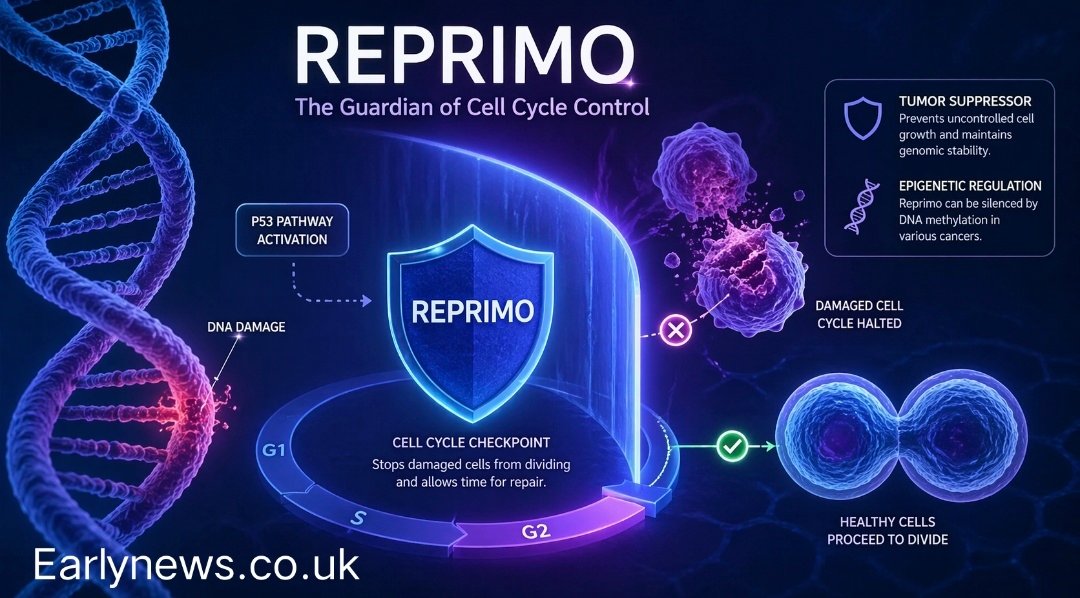
Reprimo is a gene that produces a protein involved in controlling the cell cycle, particularly at a stage where the cell prepares to divide. It functions as part of the body’s natural defense system, helping to stop the division of cells that have damaged DNA.
READ MORE: ểmgency Situations: How People Respond Under Pressure
This gene is known to be regulated by a major cellular pathway responsible for protecting genetic material. When DNA damage occurs, reprimo is activated and works to pause the cell cycle. This pause allows the cell time to repair itself before continuing. If the damage is too severe, other mechanisms may trigger cell death to prevent harmful mutations from spreading.
In simple terms, reprimo acts like a safety checkpoint, ensuring that only healthy and properly functioning cells are allowed to divide.
The Role of reprimo in Cell Cycle Regulation
The cell cycle consists of several phases that lead to cell division. Each phase is tightly controlled by checkpoints that monitor the condition of the cell. Reprimo plays a key role at one of these checkpoints, specifically before the cell enters mitosis, the stage where division actually occurs.
When DNA damage is detected, reprimo helps stop the cycle at this critical point. This prevents the cell from passing on errors to new cells. Without this control, even minor damage could accumulate over time, increasing the risk of serious conditions.
What makes reprimo unique is that it does not directly repair DNA. Instead, it creates the conditions necessary for repair by halting progression. This indirect role is essential because it ensures that repair mechanisms have enough time to function effectively.
reprimo and Its Connection to Cancer Prevention
One of the most important aspects of reprimo is its role in preventing cancer. Cancer develops when cells grow and divide uncontrollably, often due to failures in regulatory systems. Reprimo helps prevent this by acting as a barrier against the division of damaged cells.
In many types of cancer, scientists have found that reprimo is either inactive or significantly reduced. This loss of function removes an important checkpoint, allowing abnormal cells to continue dividing. As a result, the absence of reprimo can contribute to tumor development.
This connection has made reprimo an important focus in cancer research. By understanding how it works and why it becomes inactive, researchers hope to develop better methods for early detection and treatment.
Epigenetic Control of reprimo
Reprimo activity is strongly influenced by epigenetic mechanisms, which are changes that affect gene expression without altering the DNA sequence itself. One of the most common mechanisms affecting reprimo is DNA methylation.
In many cancer cases, the reprimo gene becomes hypermethylated. This means that chemical markers are added to the gene, effectively turning it off. When reprimo is silenced, its protective role is lost, allowing damaged cells to divide freely.
The interesting aspect of epigenetic changes is that they are potentially reversible. This has led researchers to explore treatments that can reactivate silenced genes like reprimo, restoring their normal function and helping to control abnormal cell growth.
reprimo as a Diagnostic Biomarker
Because reprimo expression changes in certain diseases, it has become a promising biomarker for early diagnosis. Scientists can analyze tissue or blood samples to detect whether the gene is active or silenced.
In particular, the methylation status of reprimo has been studied as an indicator of cancer. Detecting these changes early can help identify the presence of disease before symptoms appear, improving the chances of successful treatment.
This approach represents a shift toward more precise and less invasive diagnostic methods. Instead of relying solely on physical symptoms or imaging, researchers are now focusing on molecular signals like reprimo to gain deeper insight into health conditions.
Molecular Function and Mechanism of reprimo
At the molecular level, reprimo works by interacting with proteins involved in the cell cycle. When activated, it influences these proteins to stop the progression of the cycle, especially at the stage before cell division.
This process is triggered by signals that indicate stress or damage within the cell. Once reprimo is activated, it helps enforce a pause, giving the cell time to assess and repair its condition. This response must be carefully balanced, as excessive توقف could disrupt normal cell function.
The ability of reprimo to respond quickly and precisely highlights the sophistication of cellular systems. It shows how even small components can have a significant impact on overall health.
Clinical Importance of reprimo Research
Research on reprimo has important clinical implications, particularly in the field of oncology. Scientists are exploring ways to use this gene in both diagnosis and treatment.
One promising area is the development of therapies that can reverse the silencing of reprimo. By restoring its activity, it may be possible to reintroduce proper cell cycle control in cancer cells. This could slow or stop tumor growth without damaging healthy cells.
Additionally, measuring reprimo levels can help doctors understand the severity of a disease and choose the most appropriate treatment. This personalized approach has the potential to improve outcomes and reduce unnecessary side effects.
Challenges in Studying reprimo
Despite its importance, studying reprimo is not without challenges. Its function is influenced by multiple factors, including cell type, environmental conditions, and interactions with other genes. This complexity makes it difficult to fully understand its role in every situation.
Another challenge is translating research findings into practical medical applications. While laboratory studies provide valuable insights, more clinical trials are needed to confirm the effectiveness of treatments based on reprimo.
These challenges highlight the need for continued research and collaboration among scientists to unlock the full potential of this gene.
Future Prospects of reprimo Research
The future of reprimo research looks promising as new technologies allow for more detailed analysis of genetic and molecular processes. Advances in gene sequencing and molecular biology are helping researchers explore how reprimo interacts with other components of the cell.
There is also growing interest in combining reprimo studies with broader research on gene regulation and disease mechanisms. This integrated approach could lead to new discoveries that improve our understanding of health and disease.
As knowledge continues to expand, reprimo is likely to play an increasingly important role in shaping the future of medicine.
READ MORE: aurö: The Quiet Rise of a Name Shaping Modern Identity Today
Conclusion
Reprimo may not be widely recognized, but its role in maintaining cellular balance is crucial. By regulating the cell cycle and preventing the division of damaged cells, it acts as a silent guardian of health. Its involvement in cancer prevention, diagnosis, and potential treatment makes it a valuable focus of scientific research.
The study of reprimo reveals how even the smallest elements of biology can have a profound impact on the human body. As research continues, this gene holds the promise of new insights and advancements that could transform the way we understand and treat disease.
FAQs
1. What does reprimo do in the body?
Reprimo helps control the cell cycle by stopping damaged cells from dividing, allowing time for repair.
2. Why is reprimo important in cancer research?
Because it acts as a tumor suppressor, and its loss of function is linked to the development of cancer.
3. How is reprimo regulated?
It is mainly controlled through epigenetic mechanisms like DNA methylation.
4. Can reprimo be used for early diagnosis?
Yes, changes in its expression can serve as a biomarker for detecting certain diseases, especially cancer.
5. Is it possible to restore reprimo function?
Researchers are exploring treatments that can reactivate silenced reprimo genes, offering potential therapeutic benefits.
READ MORE: https://earlynews.co.uk/