

Introduction
In the world of seafood, few creatures carry the same intrigue, rarity, and cultural weight as the mirugai geoduck. With its unusual appearance and exceptional flavor, it has carved out a place not just in culinary circles but also in marine science discussions and international seafood trade. While many people may recognize it as a luxury sushi ingredient, the story of this remarkable shellfish goes far deeper than its presence on a plate. It represents a fascinating intersection of biology, tradition, sustainability, and economic value.
The mirugai geoduck is not a recent discovery. Coastal communities have known and harvested it for centuries, yet its global recognition has surged only in recent decades. Today, it is both a prized delicacy and a symbol of how natural resources can be responsibly managed. Understanding it fully requires exploring its biological identity, habitat, cultural importance, and the careful balance required to sustain its population.
What Is mirugai geoduck
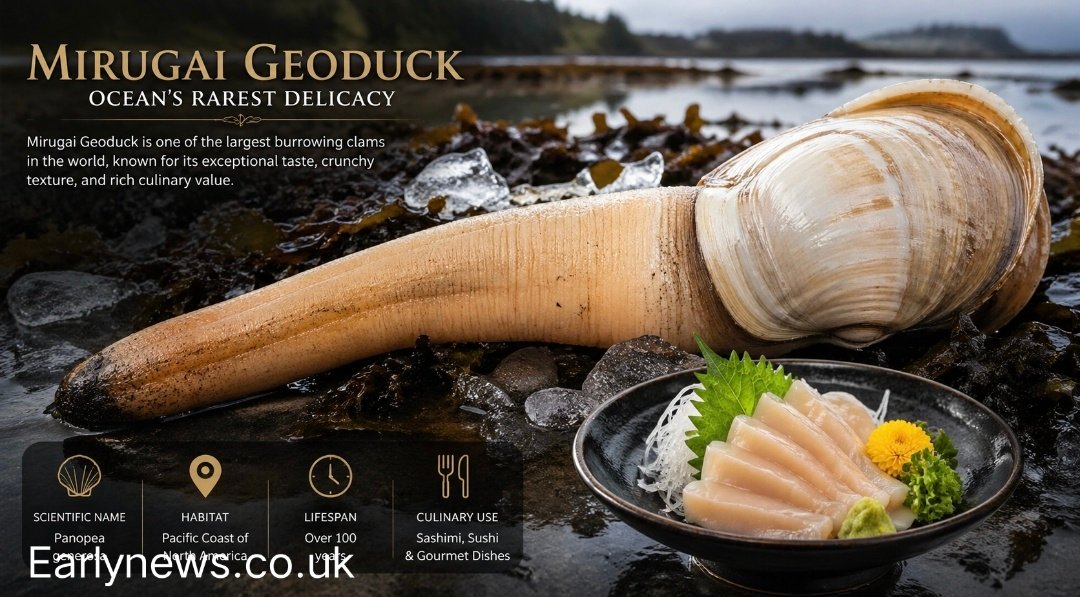
The mirugai geoduck refers to a specific preparation and naming tradition in Japanese cuisine for the species known scientifically as Panopea generosa. This marine bivalve is one of the largest burrowing clams in the world, easily recognizable by its long siphon that extends far beyond its shell.
READ MORE: Toastul Uncovered: A Quiet Shift in Modern Food Culture
Unlike most clams that remain hidden within their shells, the mirugai geoduck’s siphon can grow several times longer than the shell itself, giving it a distinctive and somewhat unusual appearance. Despite this, it is highly valued for its texture and taste. The meat is firm yet tender, with a clean, slightly sweet flavor that reflects the purity of the waters it inhabits.
The term “mirugai” is widely used in Japan, where it refers to a type of large clam served in sushi and sashimi. While traditional mirugai originally came from a different species, the Pacific geoduck has become the dominant substitute due to its availability and similar culinary qualities.
Natural Habitat and Growth Patterns
The mirugai geoduck thrives along the Pacific coast of North America, particularly in regions such as Washington State and British Columbia. These coastal environments provide the sandy or muddy seabeds that the species requires for burrowing.
What makes this clam extraordinary is its longevity. The mirugai geoduck can live well over a century, making it one of the longest-living edible marine organisms. Its slow growth and deep-burrowing nature contribute to both its resilience and vulnerability. Once settled, it remains anchored in one place, filtering plankton and nutrients from the surrounding water.
Its growth is a gradual process, taking several years to reach harvestable size. This slow maturation is one of the reasons why careful management is essential. Overharvesting without regulation could disrupt populations that take decades to replenish.
Unique Anatomy and Behavior
The anatomy of the mirugai geoduck is unlike that of most shellfish. Its shell is relatively small compared to its body, leaving much of its siphon exposed. This siphon serves as both an intake and outlet for water, allowing the clam to filter-feed while remaining buried deep beneath the seabed.
This design provides a natural defense mechanism. Predators find it difficult to reach the main body of the clam, which is securely buried. However, this same feature makes harvesting challenging, requiring specialized techniques to extract the clam without damaging it.
The texture of the siphon is particularly prized in cuisine. It offers a satisfying crunch combined with a delicate sweetness, making it ideal for raw preparations. Meanwhile, the body meat is softer and often used in cooked dishes, providing versatility that chefs highly appreciate.
Culinary Importance in Japanese Cuisine
In Japanese culinary traditions, mirugai geoduck holds a prestigious position. It is commonly served as sushi or sashimi, where its natural flavor can be appreciated without heavy seasoning. The preparation emphasizes precision, as the texture must be preserved while enhancing its visual appeal.
Chefs often slice the siphon thinly to create a balance between firmness and tenderness. The result is a dish that feels both luxurious and refreshing. Its subtle sweetness pairs well with soy sauce and wasabi, but it is equally enjoyable on its own.
The popularity of mirugai geoduck in high-end dining establishments has contributed significantly to its global demand. What was once a regional specialty is now sought after in international markets, especially in fine dining settings.
Harvesting Methods and Sustainability
Harvesting mirugai geoduck is a labor-intensive process that requires skill and care. Divers use water jets to loosen the surrounding sediment, allowing them to extract the clam without breaking its fragile shell. This method minimizes environmental impact while ensuring the clam remains intact.
Sustainability has become a central focus in the industry. Strict regulations govern harvesting seasons, quotas, and licensing, particularly in regions like Washington State. These measures are designed to maintain healthy populations and protect the marine ecosystem.
Aquaculture has also emerged as a viable solution to meet growing demand. Farmed mirugai geoduck are cultivated in controlled environments, reducing pressure on wild populations. This approach not only supports sustainability but also provides economic opportunities for coastal communities.
Economic Value and Global Trade
The mirugai geoduck is among the most valuable shellfish in the world. Its high price reflects its rarity, slow growth, and the effort required to harvest it. International demand, particularly from Asian markets, has turned it into a lucrative export product.
Regions known for geoduck harvesting have built entire industries around it. The economic impact extends beyond fishermen to include processing facilities, exporters, and restaurants. This interconnected network highlights the importance of responsible management to ensure long-term viability.
Trade dynamics can fluctuate based on factors such as environmental conditions, regulatory changes, and global demand. Despite these variables, the mirugai geoduck remains a consistently sought-after commodity.
Cultural Significance and Perception
Beyond its economic and culinary value, the mirugai geoduck carries cultural significance. In Japan, it is associated with luxury and refinement, often featured in special occasions and high-end dining experiences.
Its unusual appearance has also sparked curiosity and humor, especially among those unfamiliar with it. However, for those who appreciate seafood, it represents a unique blend of texture, flavor, and tradition.
In North America, it has become a symbol of sustainable seafood practices. Efforts to manage and protect geoduck populations have set an example for other fisheries, demonstrating that economic success and environmental responsibility can coexist.
Environmental Role in Marine Ecosystems
The mirugai geoduck plays an important role in its natural habitat. As a filter feeder, it helps maintain water quality by removing plankton and organic particles. This contributes to a balanced ecosystem and supports the health of surrounding marine life.
Its burrowing activity also influences sediment structure, creating microhabitats for other organisms. This interaction highlights the interconnected nature of marine ecosystems, where even a single species can have far-reaching effects.
Protecting the mirugai geoduck is therefore not just about preserving a food source but also about maintaining ecological balance. Sustainable practices ensure that these benefits continue for future generations.
Challenges Facing the mirugai geoduck Industry
Despite its success, the mirugai geoduck industry faces several challenges. Climate change poses a significant threat, affecting ocean temperatures and water chemistry. These changes can impact growth rates and survival.
Pollution and habitat degradation also present risks. Coastal development and industrial activities can disrupt the environments where geoducks thrive. Addressing these issues requires coordinated efforts between governments, industries, and environmental organizations.
Market fluctuations add another layer of complexity. Demand can shift due to economic conditions or changing consumer preferences, influencing prices and production levels.
Future Outlook and Innovation
The future of the mirugai geoduck depends on innovation and responsible management. Advances in aquaculture techniques are improving efficiency and sustainability, allowing for consistent production without depleting wild populations.
Research into marine ecosystems continues to provide valuable insights, helping scientists and policymakers make informed decisions. Technology is also playing a role, with improved monitoring systems ensuring compliance with regulations.
As global awareness of sustainable seafood grows, the mirugai geoduck is well-positioned to remain a leading example of how natural resources can be utilized responsibly.
READ MORE: best pasticho venezuelan lasagna near me: authentic guide
Conclusion
The mirugai geoduck is far more than an unusual-looking clam. It is a remarkable marine organism that embodies the delicate balance between nature, culture, and commerce. From its deep-burrowing lifestyle to its role in high-end cuisine, it offers a story that is both scientifically fascinating and culturally rich.
Its journey from ocean floor to dining table reflects careful stewardship and respect for natural resources. As challenges continue to emerge, the commitment to sustainability will determine its future. For those who encounter it, whether as a dish or a subject of study, the mirugai geoduck leaves a lasting impression that goes well beyond its appearance.
FAQs
What makes mirugai geoduck different from other clams?
The mirugai geoduck is much larger than typical clams and has a long siphon that extends beyond its shell, giving it a unique appearance and texture.
Is mirugai geoduck safe to eat raw?
Yes, when properly handled and sourced from clean waters, it is commonly served raw as sushi or sashimi.
Why is mirugai geoduck so expensive?
Its high cost comes from slow growth, limited supply, and the labor-intensive harvesting process.
Where is mirugai geoduck commonly found?
It is primarily found along the Pacific coast of North America, especially in Washington State and British Columbia.
How is sustainability maintained in mirugai geoduck harvesting?
Strict regulations, controlled harvesting methods, and aquaculture practices help ensure that populations remain stable and ecosystems are protected.
READ MORE: https://earlynews.co.uk/